
The Tree of Life
text and photo : Norma A. Hubbard – February 2026
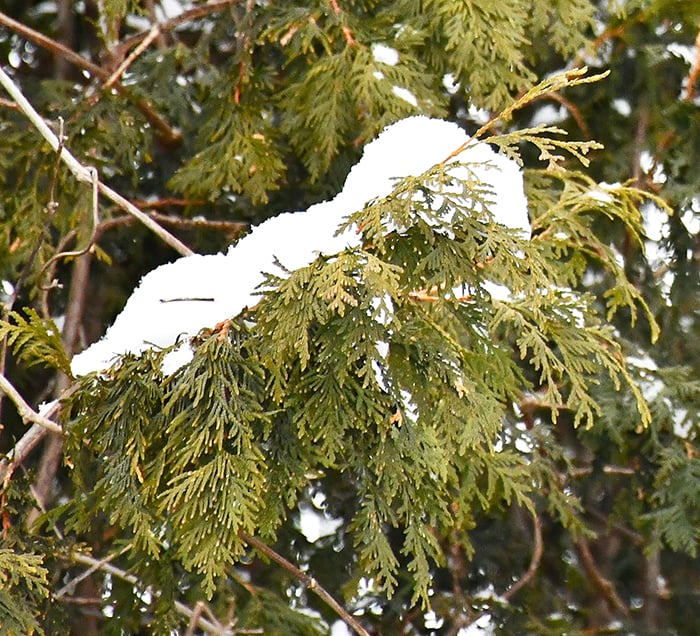 I like the change of seasons, however, by midwinter I’ve grown a wee bit tired of the shoveling, the crazy winds we seem to have too often now, and the lack of sun. Nonetheless, even in the dead of winter, taking a walk in a forest is still something I love to do. The trees provide shelter from the winds, especially the evergreen trees. Not only do they cut the wind for us and provide shelter for birds and other animals, but they also offer a touch of colour to the landscape. In fact, one of our Canadian evergreens is known as the ‘tree of life’. While our magnificent pines might come to mind, it is the unassuming Eastern white cedar (Thuja Occidentalis) that holds this title. So how did such a common tree, earn such an important title?
When Jacques Cartier and his men were dying of scurvy in the winter of 1535–1536, it was the Iroquois who showed them the healing power of Annedda, what we call cedar. While some sources differ on the details of this story, sadly in all the stories, Cartier is never shown to be grateful for this amazing gift. While Cartier thanked God for saving them, and not the Iroquois, it is clear that cedar with its high level of vitamin C is what saved them. Cartier brought cedar trees to Europe, and he called them Arborvitae, which is Latin for Tree of Life.
Obviously long before explorers arrived here, Indigenous people had already learned the value of cedar. Ojibwe people refer to cedar as Grandmother Cedar. Cedar wood is rot-resistant and lightweight. It was used for shelters, baskets, and canoes. Its leaves and bark were used to heal burns or reduce pain. Cedar, along with sage, tobacco, and sweetgrass, is still considered sacred medicine and is used in smudging, sweat lodges, and purification ceremonies. Currently, cedar is still valued for lumber and as a medicinal tree. However, as with all medicinal plants, use caution; just because something is natural, it doesn’t make it safe to consume without knowledge of what it can do.
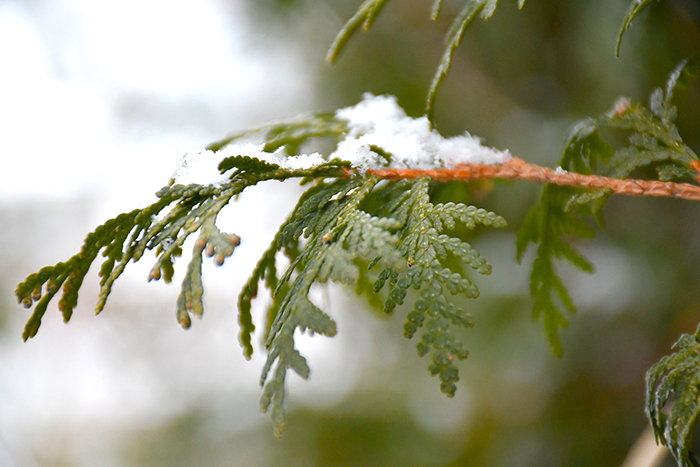 Eastern white cedar is monoecious, producing both male and female flowers on each tree. Trees reproduce by cones. It takes at least six years before a cedar will produce cones. Cone production increases as the tree ages, at 30 years old, it starts to produce larger amounts, and only after 75 years does it have its best production. An older cedar can produce about a quarter bushel of cones, however, not all cones become seedlings. It takes moist conditions for a seedling to grow. Plus, cones are often eaten by birds, rodents, or deer, making cedar important to our wildlife, not just for shelter against the cold, but also as a food source.
One of the reasons white cedars are often overlooked is because they grow so slow. We are easily impressed by tall, massive trees. I am guilty of this. When I was in BC, the western red cedars amazed me. The average white cedar can grow to 15 to 20 meters tall, which is not much compared to western red cedars that can grow to 60 meters. Those western red cedars were incredibly tall and wide and so old, yet white cedars, though comparatively small, are equally old. It is thought that white cedars may have been tall like red cedars before settlers cut them all. When examining the growth rings, white cedar rings are close together. A small white cedar can be hundreds of years old, including those that survive on cliffs or in rocky areas. These tough trees have hung on for years. Think of them as nature’s bonsais.
The oldest living tree in Quebec is a cedar. This very old cedar was found on an island in Lac Duparquet, near Rouyn-Noranda. It is hanging onto a cliff, and it is small, only about 4 to 5 meters tall. It is all bent and scrawny looking, like the grandmother tree it is, and it is believed to be 960 years old. It really is a bonsai.
Over the years, I have gathered fragrant cedar branches to hang in closets, or to decorate at Christmas. I have planted them for hedges, and I have watched small birds hide from hawks in them. Climate change has impacted cedars, making them a ‘vulnerable’ species, but they are still here. The next time you are walking in the woods, or even looking at your own cedar hedge, think about how these tough little trees have modestly stood for years, and let’s hope they will continue to do so, long after we are gone.
Online Sources: Canadian Wildlife Federation: Canada’s Cedars; Floem, Eastern White Cedar (Thuja Occidentalis): The Boreal Tree of Life – A Complete Guide to Its Virtues and Uses; La Cedriere Barbe, The Oldest Tree in Quebec; Regier, Ryan, The Cedar Tree – A Forgotten Canadian Tree Worthy of Legends; White Cedar, Greenbelt Indigenous Botanical Survey